- Knitting pattern PDFs
- Allium Pullover
Allium Pullover
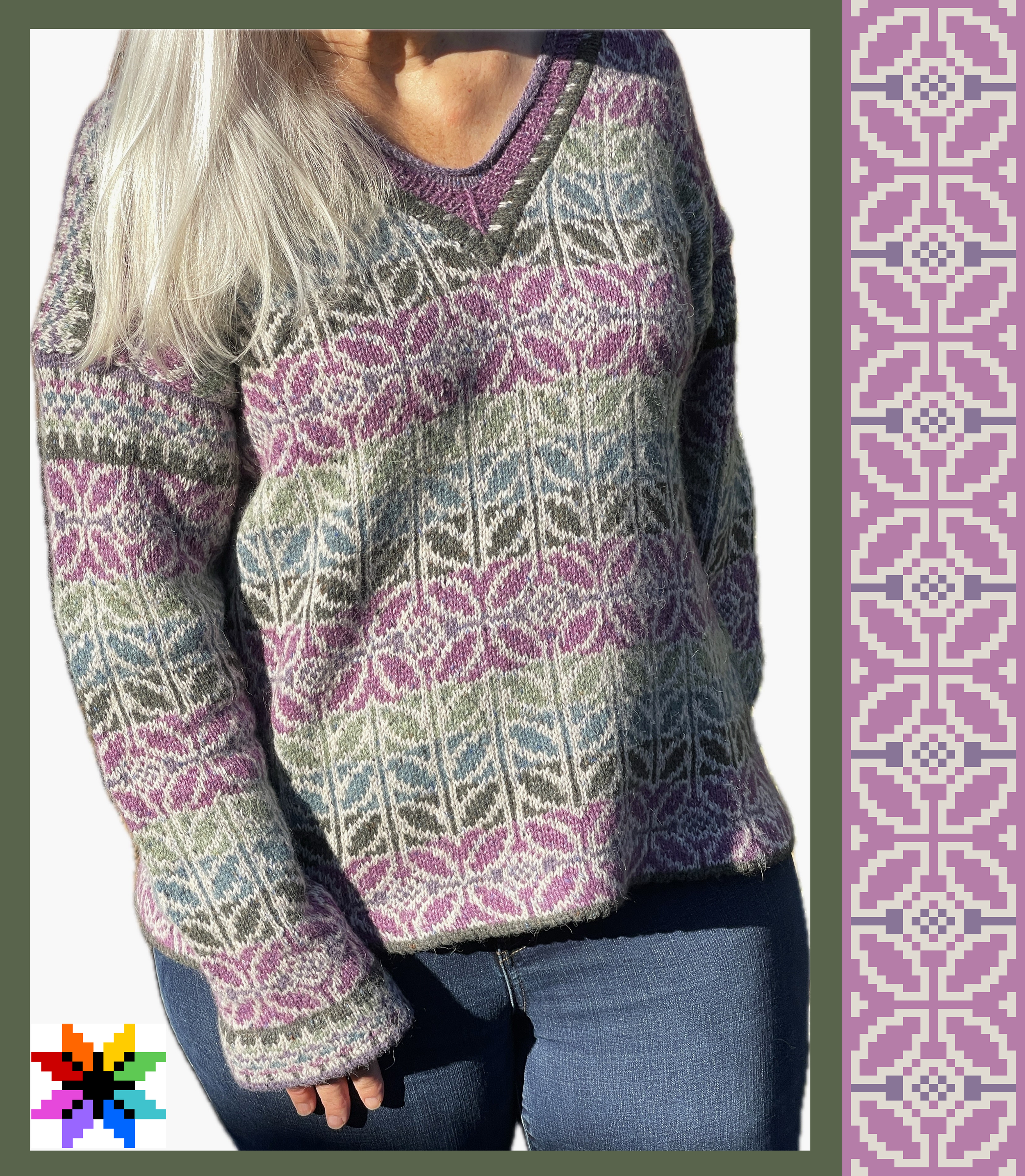
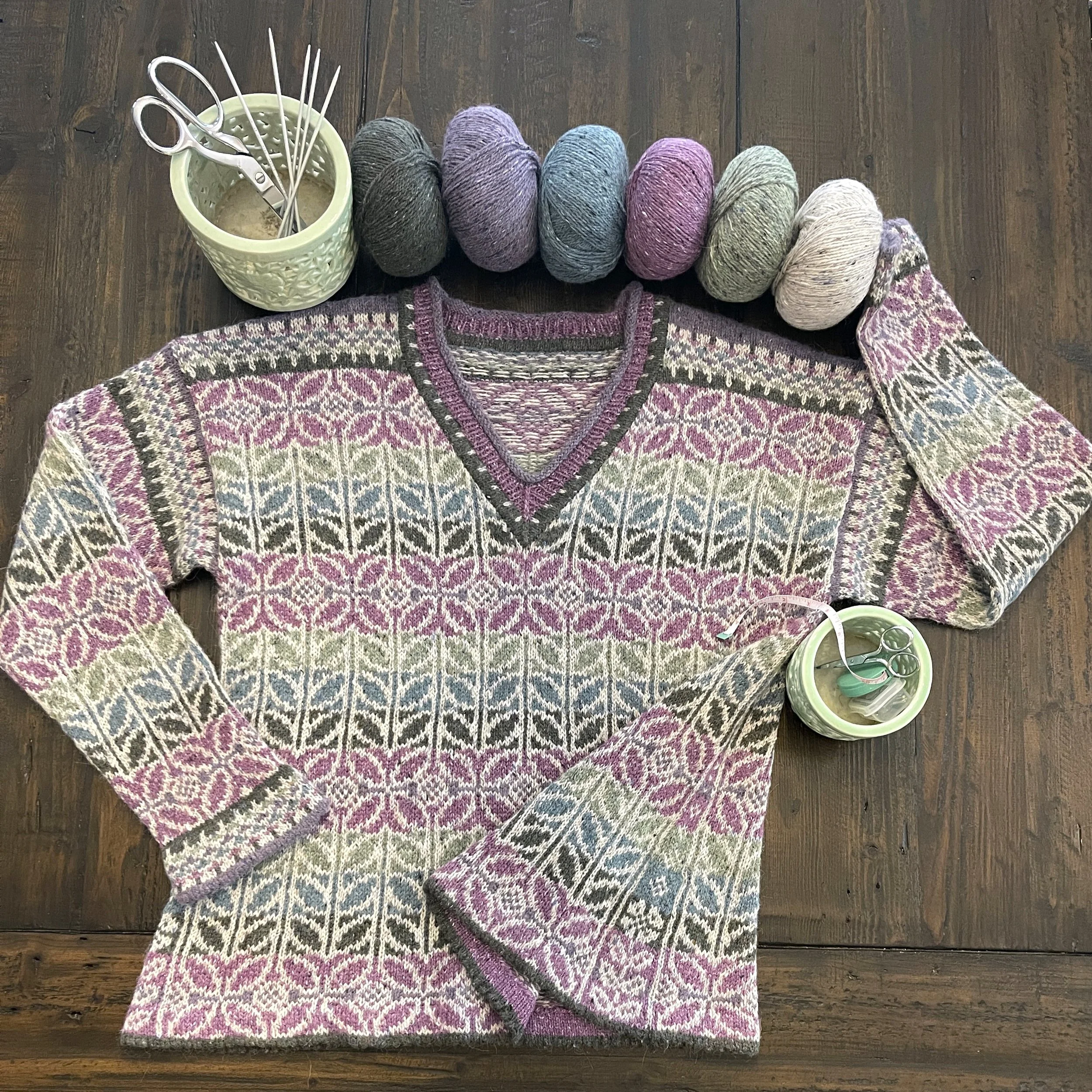
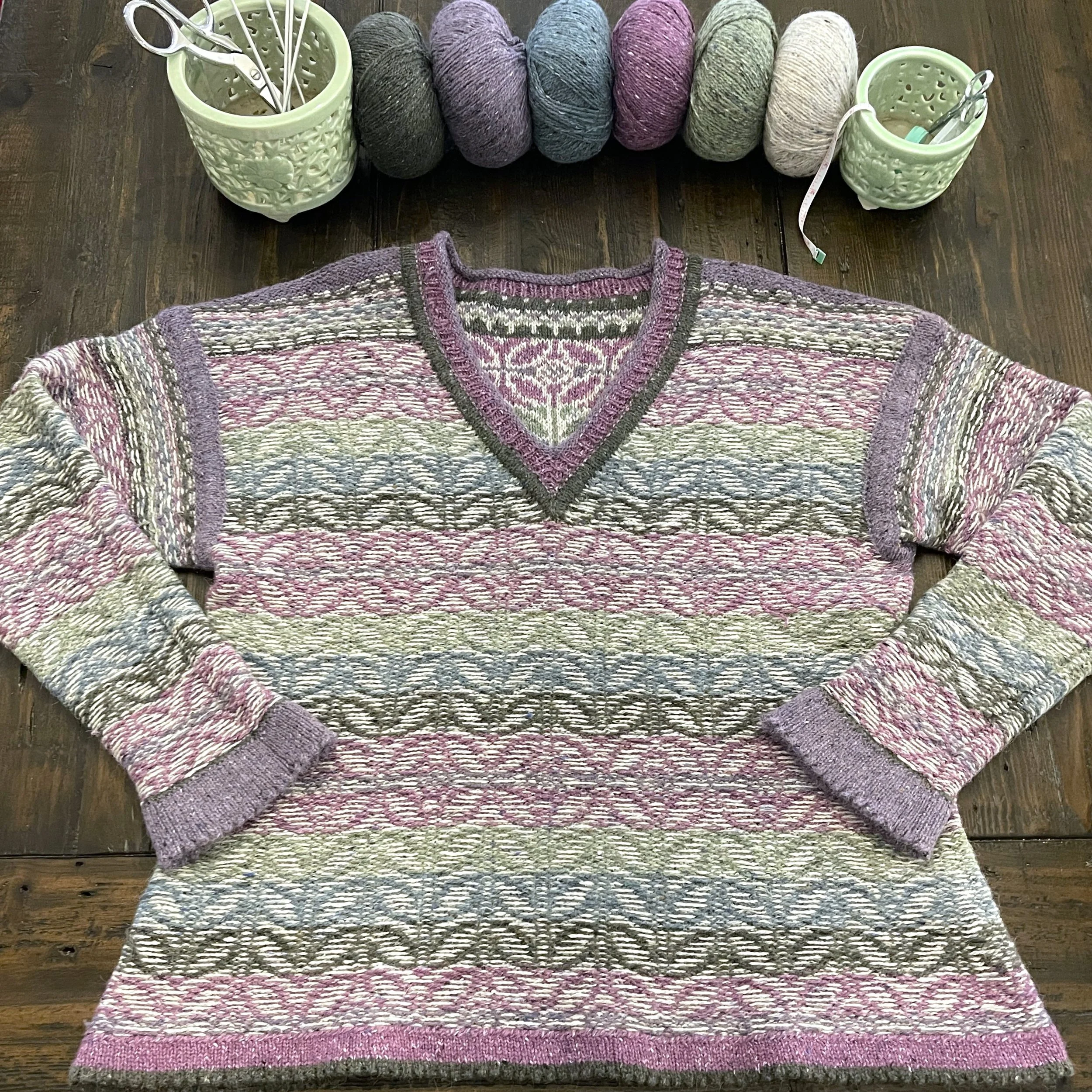
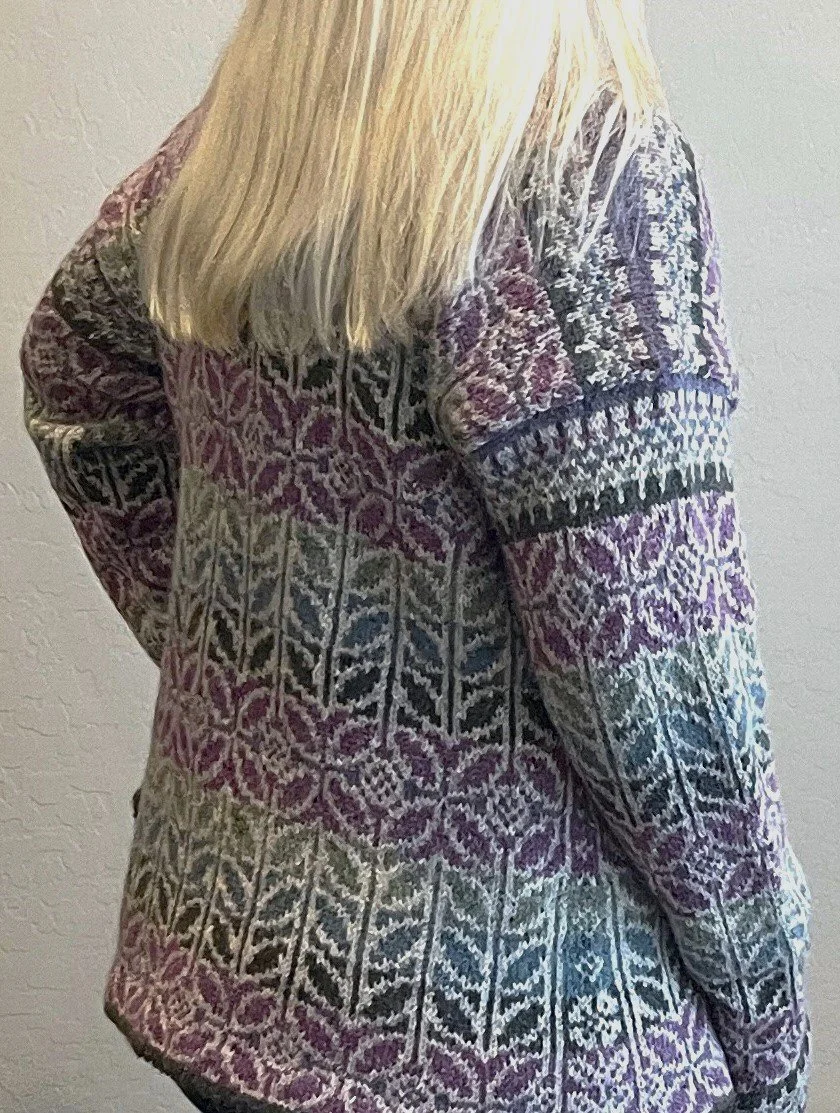
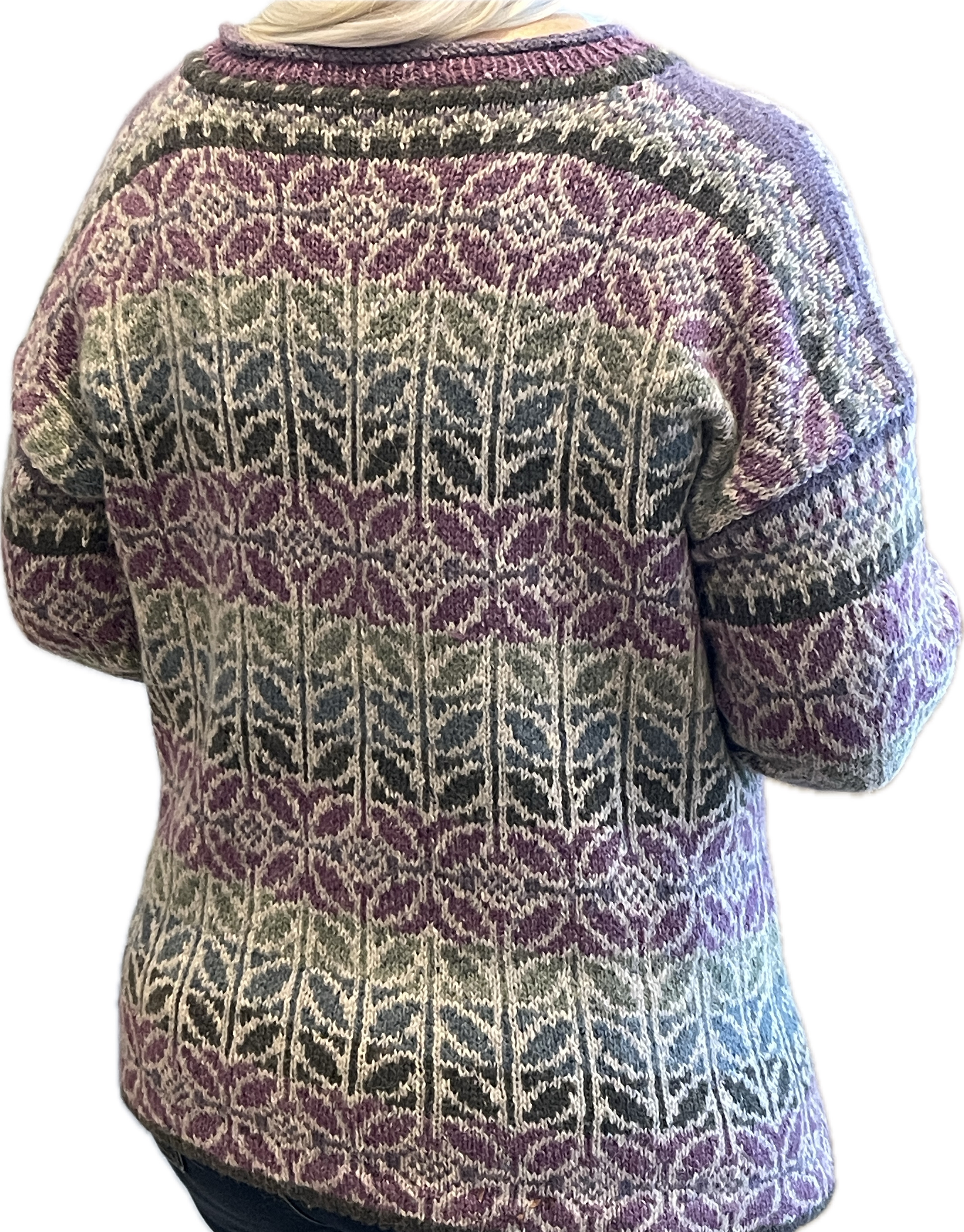
Allium Pullover
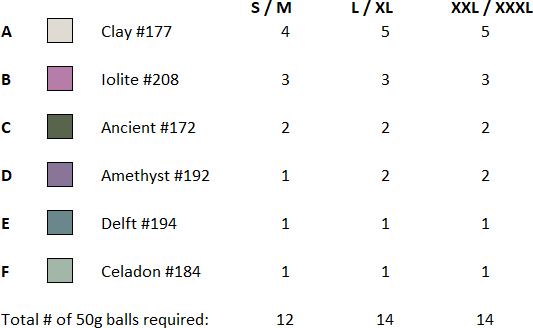
Ladies DK-weight, circularly-knit, stranded pullover using no more than two colors per round; six colors of Rowan Felted Tweed DK used throughout. Yarn packs are available here, on this website.
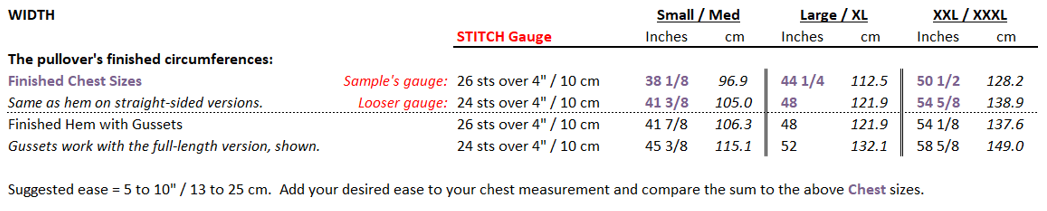
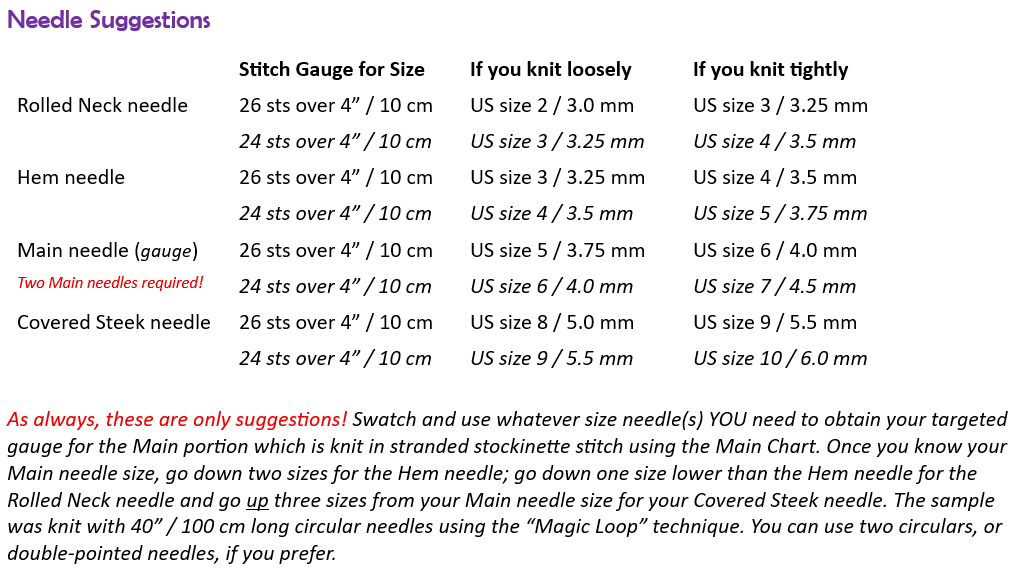
Six chest sizes are achieved by using three sets of stitch counts at two different gauges, while keeping motifs whole and symmetrical. Swipe through the photos for more info on sizes, yarn requirements and needle suggestions.
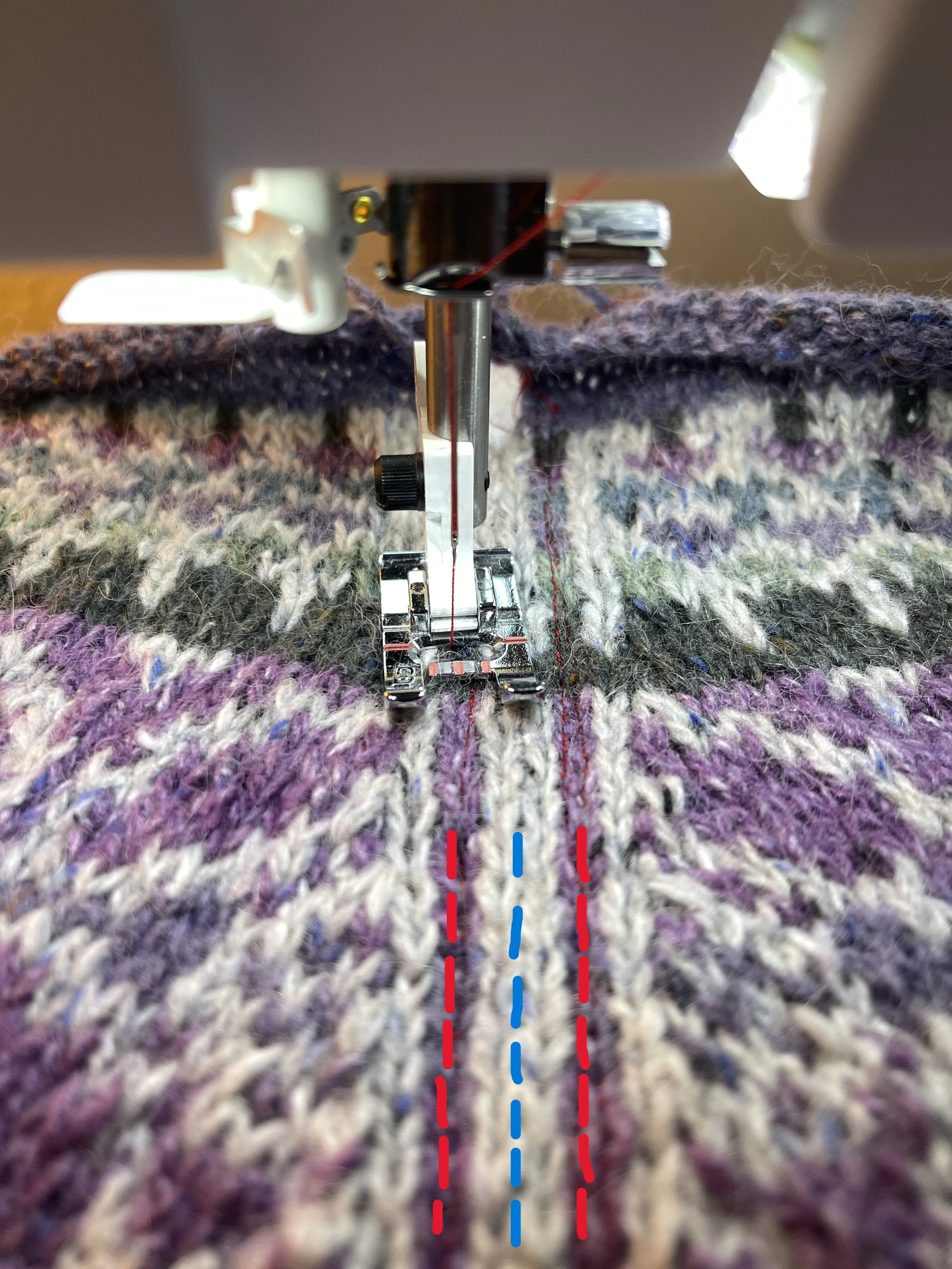
Many options for customization are included in the 31-page pdf. In addition to the usual working charts and instructions, the pattern has 27 photos and stitch-by-stitch layouts of both the upper body and the sleeves for every size. Because Felted Tweed is a soft, wool blend, machine-sewn steeks are used for reinforcement. The pattern shows you every detail of that process. If you are not yet familiar with how easy machine-reinforced steeks can be, check out my article on the process right over here, on this website.
Ladies DK-weight, circularly-knit, stranded pullover using no more than two colors per round; six colors of Rowan Felted Tweed DK used throughout. Yarn packs are available here, on this website.
Six chest sizes are achieved by using three sets of stitch counts at two different gauges, while keeping motifs whole and symmetrical. Swipe through the photos for more info on sizes, yarn requirements and needle suggestions.
Many options for customization are included in the 31-page pdf. In addition to the usual working charts and instructions, the pattern has 27 photos and stitch-by-stitch layouts of both the upper body and the sleeves for every size. Because Felted Tweed is a soft, wool blend, machine-sewn steeks are used for reinforcement. The pattern shows you every detail of that process. If you are not yet familiar with how easy machine-reinforced steeks can be, check out my article on the process right over here, on this website.
The Allium Pullover PDF is…wow, thirty-one pages long! It is NOT long because it is hard; it is long because it is extensively explained. The last nine pages are what I call “Layouts” - stitch-by-stitch maps to dramatically ease your way through the design. Within the rest of the pattern, there are 27 photos making what can be a complicated process into an easy, step-by-step project. BUT, you do need to read…carefully. Here is Page One of the pattern, which gives you an overview of the construction involved and the options offered:
Overview
Most of the techniques used for the Allium Pullover can be found in traditional stranded knitting, but there are non-traditional touches, too. And, there are many points at which you can make it uniquely yours.
The Allium Pullover is knit circularly using no more than two colors per round. Every size uses full motifs. Because the motifs are large and the design is symmetrical, instructions based upon the sample’s gauge are given for only three stitch counts. But, instructions, statistics and layouts for both the sample’s gauge and a slightly looser gauge are provided, giving you six chest sizes that work with the same yarn. Two lengths in each of the two gauges are given for the body. Sleeve lengths include both the usual, wrist-length option and a longer, mid-hand version (for my “cold hands, warm heart” friends.) The decorative bands on the shoulders and sleeves are easily modified, giving you yet more ways to fine tune your pullover’s fit.
Dropped shoulders, such as Allium’s, always contribute to sleeve length. Therefore, the body is knit first so you can decide what remaining sleeve length suits you best. The sides on either body length can be straight from top to bottom or, if you knit the long version with gussets (shown), your sides can flare gently from the waist down. The shoulders are slightly shaped with short rows for a more natural fit but, if you prefer the simplicity of traditional straight shoulders, you can skip the short rows. Both the V-neck steek and the back neck steek are established as you knit. The armhole steeks are decided upon after the body and sleeves have been knit. This approach gives us three benefits: You can mix body and sleeve sizes to get the combination that suits you best, you can tailor your armholes to the precise depths needed for your finished sleeves and you can easily create sleeve-top facings to neatly finish off the armholes. The V-neck edge is nestled into a covered steek that flows right into the V-neck ribbing which is topped with a rolled edge.
Each steek is machine-reinforced before it is cut open. If you are not yet familiar with that process, this old article on my website gives you my “Top Ten Tips” on machine-sewn steeks and shows you how very simple that process can be.
Ease
The sample shown is worn with about 6” / 15 cm of positive ease. While the traditional, straight sleeve top of a dropped shoulder gives us the ideal canvas for a decorative band, it also necessitates a fair amount of positive ease for both an appealing drape and a comfortable fit. Dropped shoulder designs typically work well with anywhere from 5 to 10” of positive ease, meaning the pullover’s finished chest circumference should be 5 to 10” / 13 to 25 cm greater than the wearer’s bust measurement.
Ten inches / 25 cm of ease might sound like a lot, but think of it this way: The pullover has a back and a front, a left and a right, i.e., four sides over which we disperse the ease. Now, envision yourself wearing it and pinching the excess fabric on each side. Each pinch on 10” / 25 cm of ease would protrude 10” / 4 = 2½” or 25 cm / 4 = 6.3 cm on each side of the body. The pinch on the sample’s 6” of ease is 1½” or 3.8 cm.
If you want a decidedly oversized look, you can go beyond 10” of ease; just be sure to shorten the sleeves accordingly. The “Sleeves” section on Page Ten describes how to target your ideal sleeve length.